Wednesday, March 27, 2013

Celestial Sightings

Just about every evening before going to bed, I take a moment to look at the stars. While the weather isn’t always agreeable, when it’s clear there’s always something worth seeing.  Last Sunday, for example, there was the beautiful sight of Jupiter and the neighboring crescent moon closely paired together.

Tomorrow night, be on the lookout for the waning moon (after all, yesterday was the worm moon — the first full moon in March) sandwiched between Spica and Saturn. You will be able to find the moon midway between the star and the planet, which are currently 17° apart.

Spica will be the white star to the moon’s upper right and Saturn will be more creamy-colored down to the moon’s lower left. Because such a full moon would usually wash out anything in its near vicinity, this degree of separation will actually help the casual observer spot the trio. It will be easiest to spot this celestial arrangement in the southeast after 11 p.m.


Spica is the brightest star in the constellation Virgo

Light from the moon, reflected from the sun, takes only 1.25 seconds to reach the earth. The light from Saturn, 830 million miles away, takes about 74 minutes. However, the light from Spica, a 1st magnitude blue giant, takes about 260 years to finally reach our eyes. So be aware that the light you'll see left the brilliant star well before the American Revolution.

For more on lunar occulations — and the best time to see this trio in your area — check out details here.

Friday, March 15, 2013

Reddit AMA: Alex Filipenko


Yesterday, Alex Filipenko, a famous astronomer as well as an astrophysics professor at UC Berkeley, did an AMA on Reddit. For those who don't know, an AMA is an "Ask Me Anything" done Q&A style on the social media site. Most of the questions revolved around the future of space exploration and research. Below I have posted some of the more insightful questions with the corresponding responses. You can view the AMA yourself, here.

Q: Where do you think we will be regarding space travel/research in 50 years? 100 years?
A: Hard to say, that far in advance. I hope we will understand dark matter and dark energy. I hope definitive evidence for extraterrestrial life is found by that time. I'm almost certain we will have directly detected gravitational waves. Regarding space travel, maybe within that time, people will land on Mars for the first time.

Q:  How will we understand or detect dark matter/energy? Will this happen in the next 50 years?
A: Physicists are trying to directly detect dark matter in terrestrial labs. I think dark matter will be found this way in the next 20 years — and if not, we need to go back to the drawing board! Dark energy will be much more difficult to directly detect, so I'm not sure it will happen in the next 50 years. Without direct detections, a more complete understanding of both dark matter and dark energy will come from from detailed observations of how they affect the universe. Other astrophysicists and I are busy collecting data that are setting ever more precise constraints on the physical nature of dark matter and dark energy.

Q: You mentioned education reform; what kind of reform do you think would help instill an actual love of knowledge in kids today? Do you think that our current system of just memorizing things and taking tests is sufficient? What do you think we can do instigate that change?
A:  Education reform is a very difficult issue. We have to excite kids about math and science at an early age. We might succeed in part by making these subjects more fun (check out http://www.piZone.org, for example). We have to show kids how math and science are relevant to their lives, and how beautiful they are. Of course, some facts must be taught, but the process of science and discovery should be emphasized more.

Q: What do you think of all the exoplanets being discovered?
A: It's totally fantastic! This is truly a "golden age" for research on exoplanets. In the past few years, the Kepler spacecraft has found a few thousand exoplanet candidates, more than 90% of which are probably genuine exoplanets. Studies of the "Doppler wobble" of the stars they orbit, and other observations, are gradually confirming more than more of them. Some are in, or near, the "Goldilocks zone" where liquid water might be found on the surface. Some are roughly the size of Earth. These will be excellent locations to search for life.

Q: What made you decide on astrophysics as a career?
A:  I've always been fascinated by science. From ages 10 through 17, my main interest was chemistry, but as a freshman in high school I was given a small telescope. With it, I "discovered" Saturn — the third "star" at which I pointed the telescope! This really jazzed me, and astronomy became a growing interest. In my freshman year of college, at the University of California at Santa Barbara, I took an introductory astronomy course from Professor Stanton J. Peale, and it was truly wonderful. I realized that the physics of the very large is governed by the physics of the very small (atoms and subatomic particles), so by switching to astrophysics I could "have it all." So I changed majors with the intention of becoming an astrophysicist, and I've never regretted the choice.
One final factor in my decision: As a budding young chemist, I played with explosives and had a couple of pretty bad accidents. I realized that I don't have the self-discipline to stay away from dangerous chemicals, so I should switch fields as an act of self-preservation, if nothing else!

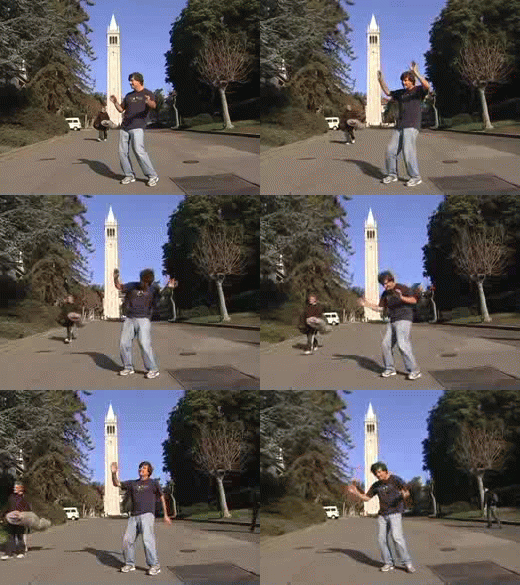
Go here to read the rest of his responses, some more serious and some more silly. (Fun aside: Someone also posted a GIF of Filipenko dancing on the Berkeley campus.)
Monday, March 4, 2013

Prolific Photography

10 percent of all photos taken ever, were taken last year.

TIME, Top 10 Photos of 2012

We currently take as many photographs in a single year as photographers did throughout the entirety of the 19th century. This tidbit and the above statistic aren't as unbelievable when you realize how slow photography was in the 1800s. I have been the subject of wet-plate collodion/tintype photographs (the dominant process in the 1800s, invented around the 1850s), and it takes about ten minutes from start to finish to make a single image with the process. Even 20th Century photography was much slower than digital photography is now; one hour photo shops gave you thirty-six prints per roll of film, tops. And that doesn't take into account the time spent out photographing.

Digital cameras and smartphones allow us to make images without any comparable constraint to volume. In an hour, a professional digital photographer can realistically make upwards of a thousand photographs in the field. With wet-plate collodion, including set-up and tear-down time for the portable darkroom, the photographer is lucky to make four.

But the very nature of digital photographs leads to interesting questions about their survivability and persistence in a historical sense. Old-school darkroom photographers often bemoan the lack of accessibility with digital files over time (anybody tried accessing information from a 5.25" floppy recently?), and by virtue of the volume of photographs being made right now, images in general seem less "special" or "worthy." Not to mention that many photographs don't exist in a physical, holdable, experiential, corporeal sense anymore. The internet is slowly changing that as it slowly abstracts the content away from the storage medium: When consumers look at a picture on Instagram, it doesn't really matter to them what Instagram stores it on, as long as they can send it to them. So now the problem becomes, when the electricity goes out, so too vanishes our photography.

Monday, February 4, 2013

Let's Get Wild

Australia has a problem, and this time it’s not the poisonous spiders, venomous snakes, or sharks. Australia’s problem is its grass. Giant African Gamba grass was introduced in the 1930s and has taken over the outback and with Australian’s recent bush fire track rate, this is worrying.

The solution? Elephants. David Bowman of the University of Tasmania has recommended rewilding an elephant population in the outback. “I’m talking about using elephants as a machine or ecological tool to manage [the] grass,” he told the Guardian. Rewilding is a conservation movement, which involves reintroducing species to areas in which they became extinct at some point in recent history.     
 
Clearly, there are risks as well with this solution. Australia has a background with being overrun by invasive species and it would be difficult to manage the elephants once released. “If we did go down the road of introducing elephants to Australia, we had better develop the technology to clone saber-tooth tigers to eventually control the elephants,” [said Ricky Spencer, senior lecturer with the Native and Pest Animal unit at the University of Western Sydney.]
 

Wednesday, January 30, 2013

Color in the Eye of the Beholder

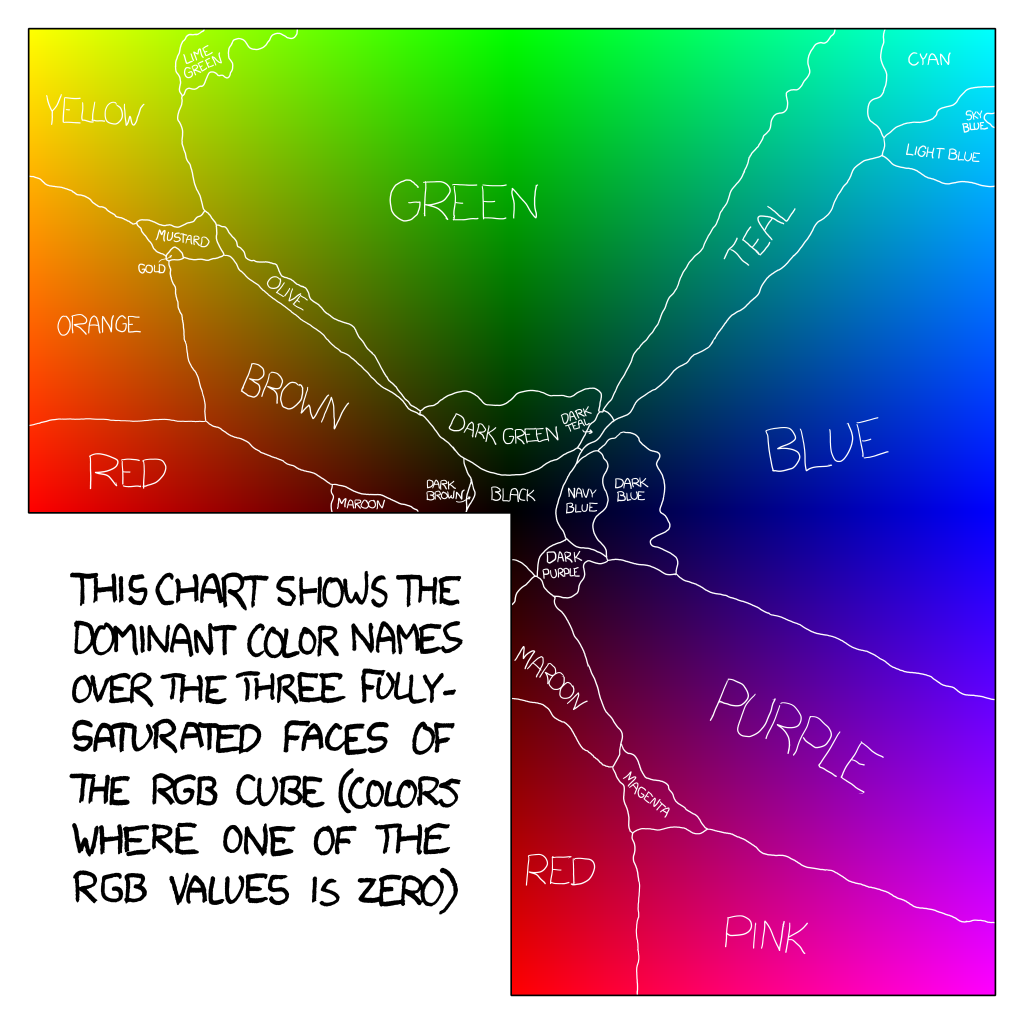
When you look at a traffic light, what colors can you name? Most people will say that the lights are red, yellow, and green. However, Japanese people often will refer to the light as being blue in color, not green. This has its roots in the history of the Japanese language, as their word ao—until the modern period—covered both green and blue. Ao in Japanese comes from the dye plant, ai, which as a dyestuff covers the whole of the blue-green portion of the spectrum.  Some cultures have what might at first seem to be peculiarly chosen "basic" color names until you learn their associations with the culture's central food sources or dye plants, or precious commodities.

The color name that covers both blue and green in many native languages of the American Southwest is also the name for the stone, turquoise. You can be certain that, in cultures where a staple food is poisonous when green and edible when red, there are separate names for green and red. In our own history, we have a very similar example to the "blue" traffic lights of Japan: "orange" didn't enter English as a color name until the 16th century, after the fruit itself was first brought to England, quite late in the evolution of our color vocabulary, which is why we still refer to "red" hair.

Berlin & Kay—early theorists of the order of evolution of color names—had to, at some point, translate the names their subjects gave to colors into English in order to assign them a place in their evolutionary chart. Often they did this using bilingual subjects, which is of course problematic, since they would already think or operate in two different linguistic color spaces. When they used dictionaries, how had the dictionary writer decided on the English equivalent of the color name?


Finally, most male English speakers can come up with eleven independent color names, but female speakers are far more likely to come up with dozens of color names without straining. Girls are culturally conditioned to be familiar with this terminology from an early age.

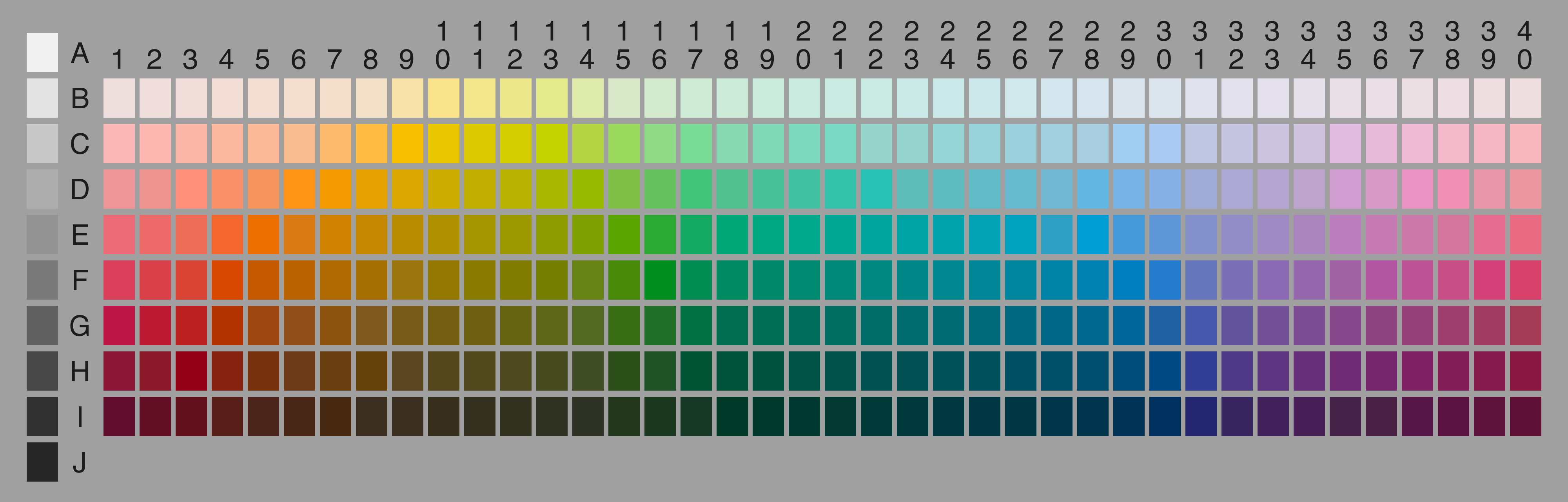
 If you want to participate in a color naming experiment, visit colornaming.net, as the folks over there are trying to determine an online color naming model.

Saturday, January 5, 2013

Density of the Universe

The density of the universe seems to be about 10-30 grams per cubic centimeter (source). With a proton having a mass of about 1.67 * 10-24 grams, we have about one proton per million cubic centimeters, i.e. one proton per cubic meter. Since electrons are much less massive than protons, this is also approximately equal to about one hydrogen atom per cubic meter.

So if the mass of the universe were spread evenly throughout space, how much could a container fit? A ten-liter container would thus hold about one-hundredth of a hydrogen atom. Not a lot!
Imagine all the mass of the universe was the size of marbles--how far apart would they be? Assuming all matter is divided up into pebbles, and assuming a pebble has a mass of about 4 grams, this means that we would need 4 * 1030 cubic centimeters (4 * 1015 cubic km) of volume for every pebble to get the right matter density for the universe. This is a lot; assuming equally spaced pebbles, this means that the average distance of one pebble to its closest neighbor is about 1.6 * 1010 cm, or 160,000 kilometers. To put this into perspective, if one pebble is the earth, and another the moon, there would only be one pebble sized distance between them.

Friday, December 14, 2012

Geminid Meteor Shower

If it's clear where you live, take a look at the Geminid meteor shower tonight, starting around 10 pm but especially after midnight. The peak was last night (Dec. 13/14), but tonight (Dec. 14/15) should be quite good as well. You can look anywhere in the sky. For more information, check out the EarthSky site.