There
will
be
a
"transit
of
Venus"
on
Tuesday,
June
5,
visible
from
throughout
the
USA.
(It
will
occur
on
June
6
in
Asia,
across
the
International
Date
Line.)
Venus
will
look
like
a
tiny
black
dot
on
the
Sun.
The
last
time
this
occurred
was
in
June
2004.
After
June
5,
2012,
to
see
the
transit
of
Venus
anywhere
on
Earth
you'll
need
to
wait
until
the
year
2117,
and
then
2125
–
no
kidding!
(The
previous
pair
of
Venus
transits
was
in
1874
and
1882.)
So,
I
suggest
you
see
it!
A
transit
of
Venus
occurs
when
Venus
passes
right
between
Earth
and
the
Sun:
it
looks
like
a
tiny
black
dot,
about
1/30th
the
size
of
the
Sun
(more
technically,
about
1
arcminute
in
diameter),
slowly
going
across
the
Sun.
You'll
be
able
to
just
barely
see
it
with
the
unaided
(but protected) eye,
but
a
far
better,
magnified
image
will
be
visible
if
you
look
through
binoculars
(properly
filtered)
or
a
telescope
(again,
properly
filtered).
If
you
wish,
you
can
get
very
nice,
appropriate
equipment
at
many
stores,
such
as
Scope City.
Wherever
you
live,
local
amateur
astronomy
organizations
and
science
centers
will
set
up
telescopes
for
public
viewing, you'll just have to
check
online
for
locations. The
Chabot Space and Science Centerin
the
Oakland
hills
is
one
such example.
In
the
Pacific
Daylight
Time
(PDT)
zone,
the
transit
starts
on
June
5
at
about
3:07
pm,
though
it
will
be
hard
to
notice
until
around
3:24
pm.
Mid-eclipse
will
be
at
6:27
pm.
In
the
San
Francisco
Bay
Area,
sunset
occurs
around
8:28
pm.
The
transit
ends
at
9:47
pm
PDT,
after
sunset
in
California.
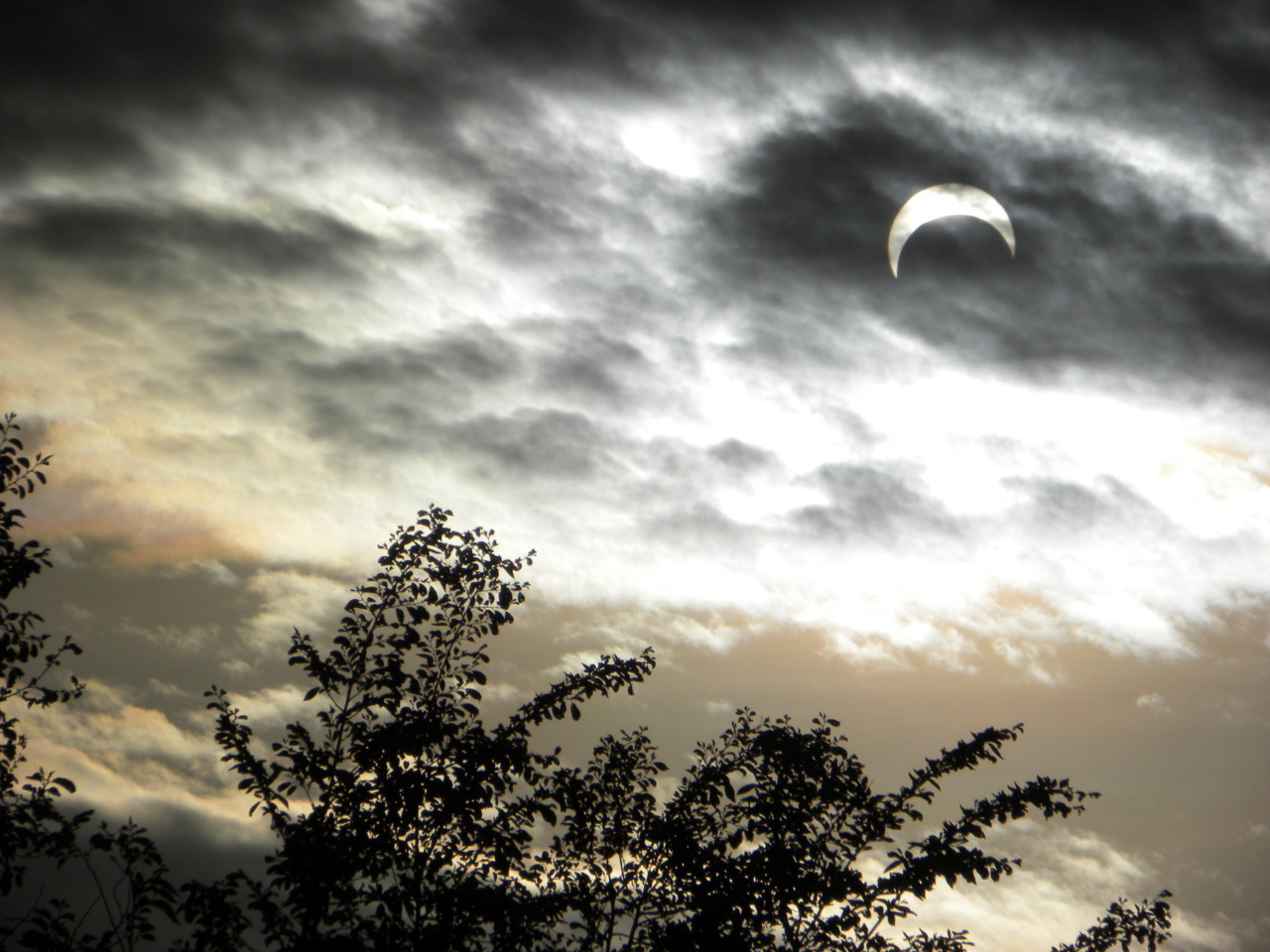
As
with
the
partial
lunar
eclipse
above,
if
you
are
in
other
time
zones,
adjust
the
times
accordingly. These
times
are, of course,
approximate to
within
a
few
minutes, however
they
will depend
slightly
on
your
exact
location
within
a
time
zone.
So,
progressively
less
of
the
transit
will
be
visible
the
farther
east
you
go
in
the
USA.
Suppose
you
consider
the
Sun’s
disk
to
be
like
the
face
of
a
clock
when
you
look
directly
at
it.
As
seen
from
San
Francisco
and
most
of
the
USA/Canada,
Venus
will
begin
to
transit
at
roughly
the
12
o’clock
position
(i.e.,
near
the
top
of
the
Sun),
but
around
sunset,
Venus
will
be
near
the
4
o’clock
position. More
information
on
the
event
can
be
found
at
transitofvenus.org,
and
eclipse.gsfc.nasa.gov/OH/transit12.html.
Transits
of
Venus
are
historically
important
because
observations
of
them
in
1761
and
1769
from
many
different
locations
on
Earth
led
to
the
first
accurate
(to
within
2%)
estimate
of
Earth's
distance
from
Venus,
and
hence
of
Earth’s
distance
from
the
Sun
(the
“Astronomical
Unit”)
since
the
relative
distances
were
already
known.
Viewed
from
a
given
location
on
Earth,
the
exact
position
of
Venus’s
silhouette
depends
on
Venus’s
distance,
so
one
can
solve
for
the
distance
using
a
bunch
of
measurements.
Transits
of
Venus
are
important
now
because
they
illustrate
the
technique
with
which
thousands
of
exoplanets
are
being
found
by
the
Kepler
spacecraft:
the
total
brightness
of
a
star
periodically
drops
a
tiny
bit
while
an
exoplanet
transits
across
its
disk,
as
seen
by
us.
If
you
monitor
a
star’s
brightness
and
notice
a
slight
periodic
dimming,
you’ve
probably
detected
an
exoplanet.
If
you are planning on
looking
directly
at
the
Sun,
remember
that
you
need
proper
eye
protection
or
you
could
permanently
damage
your
eyes!
Use
"Shade
14
welder's
glass"
(available
at
welding
supply
stores)
or
some
other
safe
filter
which
blocks
99.999%
of
the
Sun's
rays
at
visible,
ultraviolet,
and
infrared
wavelengths.
Appropriate
"eclipse
glasses"
can
also
be
found
and
purchased
online
for
just
a
few
dollars
(comparable
to
Shade
14
welder's
glass,
but
less
durable).
Regular
sunglasses
or
smoked
glass
won't
suffice
by
a
long
shot.
Without
magnification,
the
black
silhouette
of
Venus
will
be
barely
visible
to
the
naked
eye,
or
possibly
even
invisible,
depending
on
your
visual
acuity.
A
magnified
view
will
be
much
better.
If
you
have
a
sufficiently
small
pair
of
binoculars,
you
can
securely
tape
a
piece
of
Shade
14
glass
across
the
front
end
(so
that
light
goes
through
the
filter
before
entering
the
binoculars). Many
local
amateur
astronomy
clubs
and
science
centers
will
have
properly
filtered
telescopes
for
public
viewing,
providing
a
magnified
image.
I
encourage
you
to
visit
them
and
watch
the
transit
safely.